
Guides
Winter Home Inspections: Freeze Damage, Furnaces, and What Changes on Site
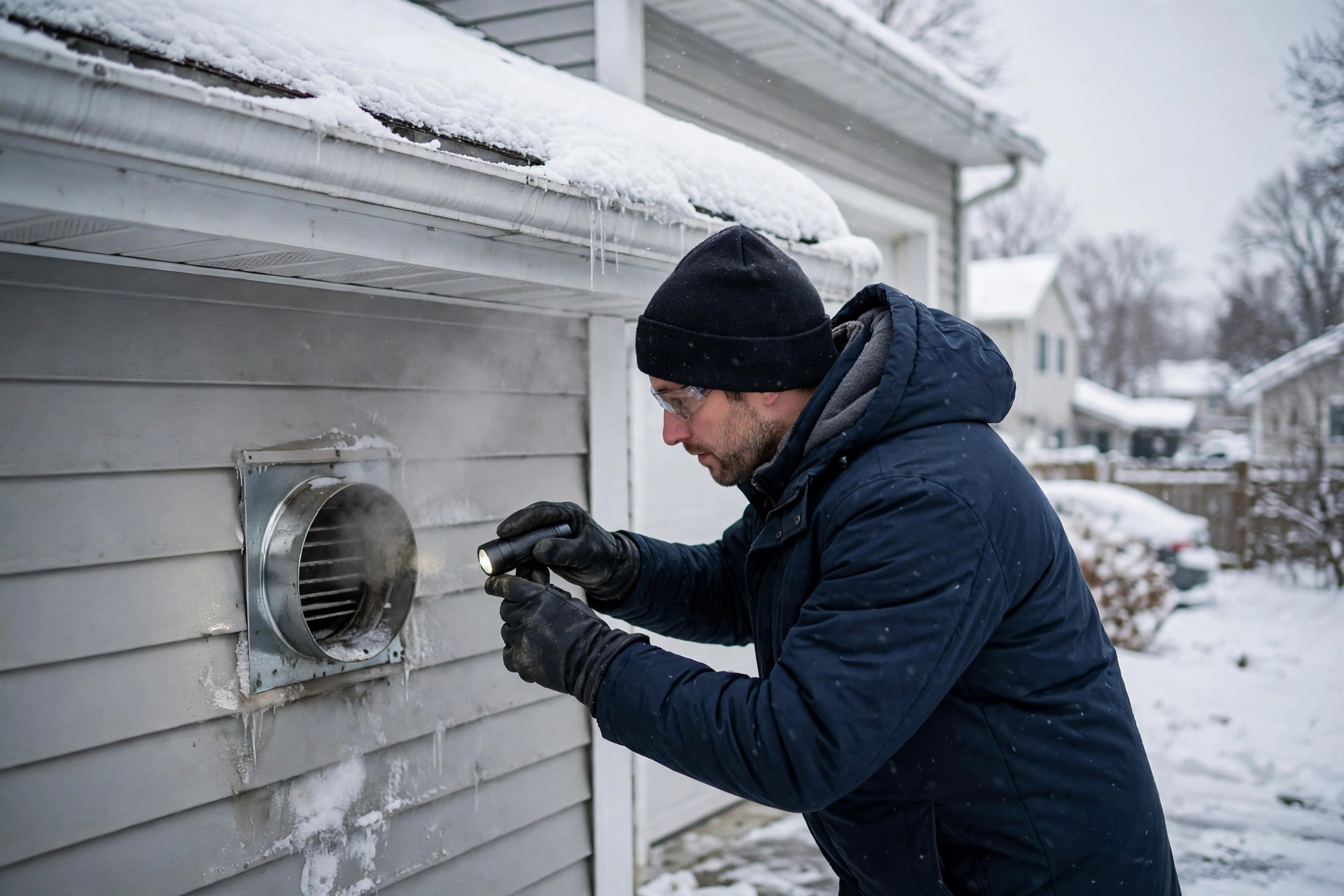
A winter inspection is not a summer inspection in a coat. The house behaves differently when it is cold: the heating system runs hard, water moves slowly or not at all, and snow covers the parts of the house you most want to see. Buyers still need a complete report — so the inspector's job is to work with the season instead of fighting it, and to write down clearly what could be checked, what could not, and why.
For anyone choosing home inspection report software, winter is also the season that exposes a weak report. Cold-weather findings come with photos that need explaining, limitations that need stating plainly, and repair-cost estimates that help a buyer decide before the closing date. Here is what changes on site in winter, and how to document it.
The roof you cannot see
Snow is the biggest limitation of a winter inspection, and the most honest one to write down. A snow-covered roof cannot be walked, and shingle condition cannot be judged through a foot of snow. That does not mean the roof section of the report stays blank.
Check what the snow does reveal. Uneven melting across the roof surface can point to heat loss from the attic — warm patches where snow melts first are worth a photo and a note. Icicles along the eaves and a ridge of ice at the roof edge can indicate ice dams, which form when heat escaping through the roof melts snow that refreezes at the colder edge. Look at the gutters from the ground: ice packed inside them, or downspouts that end in a frozen block, tell the buyer the drainage system is not moving water away from the house.
Then say plainly in the report what you could not inspect and why, and recommend a follow-up roof check when the snow clears. A buyer who reads "roof not fully visible due to snow cover — recommend re-inspection in spring" trusts the report more, not less. The limitation is the finding.
Furnaces and boilers earn their inspection in winter
In summer, a furnace gets a quick cycle test. In winter, it is running under real load, which is the best test it ever gets. Let it run and listen: short cycling, a burner that struggles to light, or a unit that runs constantly without reaching the thermostat setting are all worth documenting with a photo and a severity note.
Check the filter first — a clogged filter is the most common cause of a furnace working too hard, and it is the cheapest fix in the whole report. Look at the flue and venting for rust, soot, or disconnected sections. Outside, check the exhaust and intake vents for snow or ice blockage; a high-efficiency furnace with a blocked intake can shut itself down on the coldest night of the year.
Note the age of the unit from its data plate and photograph it. Age plus observed condition is what lets a buyer judge whether a furnace is a maintenance item or a replacement budget. If the furnace is old and struggling, a repair-cost estimate next to the finding turns a vague worry into a number the buyer can plan around.
Frozen pipes leave clues before they burst
Pipes rarely freeze without warning. The clues are small: a faucet that runs slowly on a cold morning, a section of pipe in an unheated crawlspace or garage with no insulation, a hose bibb that was never drained for winter, or water stains on a ceiling below a bathroom that only appear after a thaw.
On a winter visit, run every faucet and flush every toilet. Low flow at one fixture while the others run normally points to a partially frozen or restricted line. Feel exposed pipes in unheated spaces for cold spots. Check the water heater's surroundings too — a unit in a cold garage works harder and ages faster, and its venting deserves the same check as the furnace's.
Document pipe insulation — or its absence — with photos. "No insulation on water supply lines in the unheated crawlspace" is a finding a buyer can act on for a few dollars of foam sleeves, and it reads very differently from a burst pipe discovered after closing.
The basement and attic tell the winter story
Winter pushes moisture indoors. In the basement, look for condensation on windows and pipes, efflorescence on foundation walls, and any sign that snowmelt is finding its way in at the wall-to-floor joint. A sump pump deserves a test in winter as much as in spring — a failed pump discovered during a thaw is a flooded basement.
In the attic, look for frost on the underside of the roof deck and on nails, which points to warm, moist air leaking up from the living space. Check that insulation is even and that vents are not blocked by stored boxes. Poor attic ventilation in winter shows up as ice dams outside and frost inside — two findings with one cause, and a report that connects them is a report the buyer remembers.
What to tell the client before the visit
Winter inspections go smoother when the buyer knows what to expect. A short note before the visit covers it: the roof may not be fully visible under snow, the inspector will need the heat running and access to the attic and crawlspace, and some items may carry a recommendation for a spring re-check. Setting that expectation in advance keeps a limitation from feeling like a surprise in the report.
It also helps to photograph more in winter, not less. Snow hides things, so every finding needs its photo to be believed — and every limitation needs its photo too, so the buyer can see the snow for themselves. A photo of the snow-covered roof next to the limitation note does more work than a paragraph of explanation.
Writing the winter report
A winter report has three jobs: record what was found, state plainly what could not be inspected, and give the buyer a cost for what needs fixing. The limitations section is not an apology — it is part of the inspection, and buyers and their agents read it closely.
That is where the report tool matters. A finding needs its photo, its severity, and its repair-cost estimate in one place, so the buyer sees the frozen hose bibb, the missing pipe insulation, and the price to fix both without flipping pages. InspectReport AI is built for exactly that workflow: photos and short notes from the site become structured findings with severity suggestions and repair-cost estimates from a price book, then export as a clean PDF. Accounts, reports, and the live preview are free, and every new account gets a free 7-day Pro trial with full access including PDF export and no card required. After the trial, it is $9 a month flat per account, with no per-inspector fees (as of November 2026).
Winter does not make an inspection less useful. It makes the inspection different — and a report that says so, clearly and with photos, is the one a buyer trusts when the snow melts.
Try it on your next job — free
Every new account gets a free 7-day Pro trial with full PDF export, and no card is required. After the trial, $9/mo flat per account keeps PDF export — reports and the live preview stay free either way.
Start my free 7-day trialMore from the blog
- Switching Home Inspection Report Software: A Migration Checklist That Loses Nothing
- AI in Home Inspection Reports: What It Can and Can't Do, Honestly
- Change Orders Without the Fight: Documenting Extra Work So Customers Approve It
- For Roofers: How to Write a Repair Quote Customers Approve Faster
- Same-Day Report Delivery: The Workflow That Makes It Routine
- Repair-Cost Estimates in Inspection Reports: How Inspectors Price Findings
- Home Inspection Checklist: What Inspectors Check, Room by Room
- Spectora Pricing Explained: What 1-, 3-, and 5-Person Shops Actually Pay
- How Much Does Home Inspection Software Cost in 2026? Vendor-by-Vendor Math
- Home Inspection Report Template: What a Complete Report Includes
- Best Home Inspection Report Software in 2026: An Honest Ranking
- How to Write a Home Inspection Report Faster (Without Cutting Corners)
- Spectora vs InspectReport AI: An Honest Comparison (2026)
- HomeGauge vs InspectReport AI: An Honest Comparison (2026)
- How Contractors Can Document Jobs with Photos and Send a Clean, Priced PDF