
Guides
4-Point Inspection Reports: What Insurers Ask For and How to Deliver Them Fast
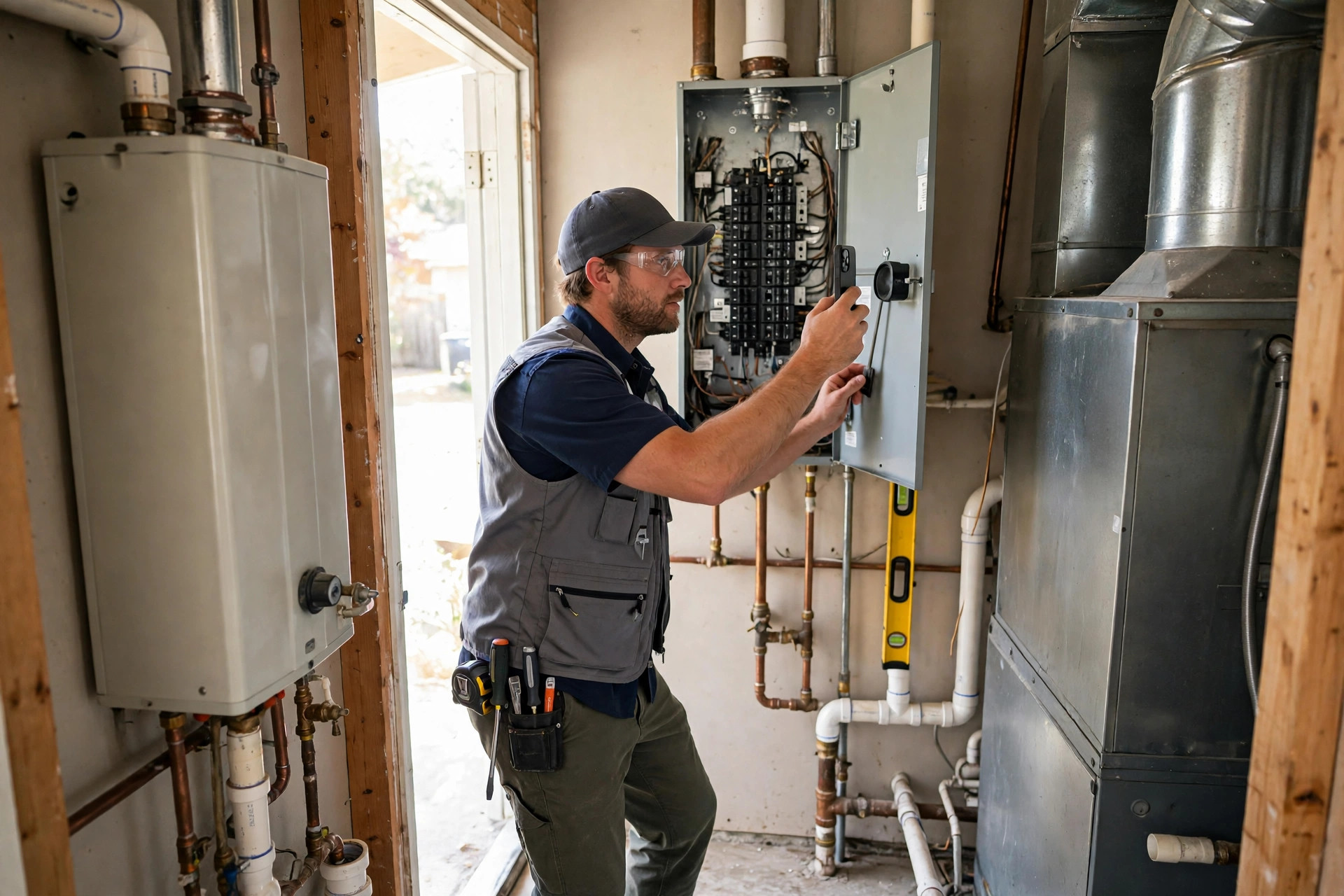
A 4-point inspection is the shortest report an inspector writes — and one of the most consequential. It covers only four systems in a house: the roof, the electrical system, the plumbing, and the heating and air conditioning. One to two pages, a set of photos, and a signature. Yet for an older home, that short report can decide whether the owner gets insurance at all.
If you write home inspection reports, the 4-point is a service worth offering well. It is fast to perform, it is usually requested on a deadline — a buyer closing in days, an owner renewing a policy — and the audience is not the homeowner. It is an underwriter who has never seen the house and wants one answer: is this home likely to produce a claim?
What a 4-point inspection actually is
A 4-point inspection is a condition report on four systems: roof, electrical, plumbing, and HVAC. The inspector records the age, type, and condition of each system and photographs them. The report is written for underwriting, not for the buyer. The sample form from Citizens Property Insurance Corporation, Florida's state-created insurer, states the information "is used to determine insurability and is not a warranty or assurance of the suitability, fitness or longevity of any of the systems inspected."
It is not a full home inspection. A full inspection walks the whole house — structure, exterior, interior, appliances, grading, and more — and produces a long report for the buyer. A 4-point looks at four systems only and produces a short form for the insurer. Homeowners sometimes confuse the two, so it is worth saying plainly in your scheduling call: the 4-point will not tell them whether the house is a good buy. It will tell their insurer whether the house is an acceptable risk.
When insurers ask for one
There is no single law that sets a 4-point age threshold. Each insurer writes its own underwriting rule, and the rules converge around the age of the home. The clearest published example is Citizens Property Insurance, the largest residential carrier in Florida, where 4-point inspections are most common. As of November 2026, Citizens requires a 4-point inspection on new applications for homes more than 20 years old, and its underwriters may ask for one at renewal case by case.
Most private carriers use a later trigger — commonly 25 to 30 years — and ask for an updated report every few years at renewal. Beyond 40 years, the requirement is effectively universal: almost no carrier will write a home built before the mid-1980s without a fresh 4-point in hand.
How fresh the report must be is up to each insurer. Florida's Insurance Consumer Advocate notes that reports are generally dated within 30 days before the insurance application, so a 4-point done six months ago may not satisfy a carrier even if nothing in the house has changed.
What the inspector documents in each system
Roof
The roof is the section that most often decides the outcome. The inspector records the covering material, the approximate age, the condition, evidence of past or active leaks, and the estimated remaining useful life. Carriers have become specific about age: since Florida's 2022 property insurance reforms, an insurer cannot refuse to write or renew a policy solely because of roof age if the roof is less than 15 years old. Once a roof is 15 years or older, the owner has the right to an inspection showing at least five years of remaining useful life, and a carrier that receives that inspection cannot refuse on age alone. Citizens applies its own thresholds on top of that: shingle and other soft roofs older than 25 years, and tile, metal, slate, and concrete roofs older than 50 years, require a roof inspection form documenting five years of remaining life before a policy is written.
Electrical
The electrical section records the panel type and age, the service amperage, the wiring type, and any visible hazards. The items underwriters flag most are cloth wiring, active knob-and-tube wiring, single-strand aluminum branch wiring, and visible hazards such as scorching or double taps. Citizens requires at least 100-amp service on new applications. A photo of the open panel is part of the minimum photo set on the Citizens form — underwriters want to see the panel, not just read about it.
Plumbing
The plumbing section records the supply and drain pipe materials, the age and condition of the water heater, and any active leaks. Polybutylene piping is the big one: Citizens does not insure new-business homes over 20 years old with polybutylene piping. The water heater matters too — the Citizens form asks for a photo of the water heater including its temperature-pressure relief valve.
HVAC
The HVAC section records the age, type, and condition of the heating and cooling equipment, and whether it is working as intended. The underwriter's question is practical: will the air handler drain into the ceiling, will the system fail in the first year of the policy, and is the equipment past its useful life?
What most often holds up coverage
The same short list shows up again and again: a roof at the end of its life with no remaining-life documentation, an old or hazardous electrical panel, aluminum branch wiring, polybutylene pipe, an active leak, and a water heater past its service life. None of these are surprises to an experienced inspector — which is why the value of the 4-point is not just the form, it is the inspector telling the homeowner, on the spot, which of these items will cost them the policy and what fixing it would take.
When a system fails, say so in plain language and say what would change the answer. "Roof has less than five years of remaining life" is a verdict. "Roof has less than five years of remaining life; a roofer's remaining-life inspection or a replacement would satisfy the carrier" is a verdict with a path forward, and it is the version the homeowner's agent can actually use.
Who can sign a 4-point, and what photos it needs
The Citizens sample form must be completed, signed, and dated by a verifiable Florida-licensed professional — a general, residential, or building contractor, a building code inspector, or a home inspector are the examples it gives. Florida-licensed architects, professional engineers, and building code officials are also accepted if their license can be verified. A trade-specific professional, such as an electrician, may sign only the section for their trade.
The minimum photo set on the Citizens form includes each side of the home, each slope of the roof, the open electrical panel, and the water heater. In practice, photograph more than the minimum. A photo of every data plate, every label, and every defect you describe is what keeps the underwriter from coming back with questions — and questions are what kill the deadline.
4-point vs. wind mitigation: different forms, different jobs
Many of the same older Florida homes need both a 4-point and a wind mitigation inspection, and homeowners mix them up. The distinction is simple: a 4-point inspection decides whether the homeowner can get insurance; a wind mitigation inspection decides how much discount they get on the premium. Different forms, different purposes. Doing both at one visit is standard practice and usually costs the homeowner less than two separate trips — offer the bundle when you schedule the 4-point.
Delivering a 4-point fast: the workflow
The 4-point is a speed job. The homeowner or agent usually needs it within days, and the underwriter needs it complete the first time — a form that comes back with questions is a form that missed its closing. The workflow that works:
- Photograph everything at the point of inspection. Data plates, panel interiors, the water heater label, each roof slope, each side of the house. Photos taken later, from memory, are how details get missed.
- Record age, type, and condition per system — nothing more. The 4-point is a form, not an essay. Short, structured findings with a severity call beat paragraphs.
- Put a repair cost next to any deficiency. The underwriter decides insurability, but the homeowner decides what to fix, and a cost turns a defect into a decision.
- Send a clean PDF the same day. The report is one to two pages; there is no reason it should take a week. Same-day delivery is the service that gets you the next referral from the agent who sent this one.
This is exactly the job home inspection report software should make routine. InspectReport AI includes a built-in 4-point insurance report template: photos and short notes at the job become a structured report with severity badges and a priced PDF, ready the same day. Every new account gets a 7-day free Pro trial with full PDF export and no card required; after the trial, it is $9/mo flat per account, with no per-inspector fees. If you already write full inspection reports, the 4-point is a second service on the same workflow — same photos, same notes, a shorter form, and a faster turnaround.
The checklist, in short
- Four systems only: roof, electrical, plumbing, HVAC — age, type, condition, photos.
- Expect the request on homes over 20 years old (Citizens) and 25–30 years old (most private carriers); effectively universal past 40 years.
- Watch the roof's remaining life, the panel, the wiring type, polybutylene pipe, and active leaks — those are the coverage decisions.
- Report dated within about 30 days of the application; signed by a verifiable licensed professional.
- Deliver a clean PDF the same day, with a cost next to every deficiency and a path forward for anything that fails.
Try it on your next job — free
Every new account gets a free 7-day Pro trial with full PDF export, and no card is required. After the trial, $9/mo flat per account keeps PDF export — reports and the live preview stay free either way.
Start my free 7-day trialMore from the blog
- Home Inspection Report Software for Multi-Inspector Firms: Flat Pricing vs Per-Inspector Fees
- Section 8 Inspections Are Changing: NSPIRE, the 24-Hour Clock, and What to Walk Before February 1, 2027
- Commercial Building Inspection Reports: What a CAPEX Summary Adds for Buyers and Owners
- InspectForge Pricing Explained: What Inspectors Actually Pay
- HomeGauge Pricing Explained: What Inspectors Actually Pay
- What Buyers Actually Read in Your Inspection Report (and What They Skip)
- Winter Home Inspections: Freeze Damage, Furnaces, and What Changes on Site
- Switching Home Inspection Report Software: A Migration Checklist That Loses Nothing
- AI in Home Inspection Reports: What It Can and Can't Do, Honestly
- Change Orders Without the Fight: Documenting Extra Work So Customers Approve It
- For Roofers: How to Write a Repair Quote Customers Approve Faster
- Same-Day Report Delivery: The Workflow That Makes It Routine
- Repair-Cost Estimates in Inspection Reports: How Inspectors Price Findings
- Home Inspection Checklist: What Inspectors Check, Room by Room
- Spectora Pricing Explained: What 1-, 3-, and 5-Person Shops Actually Pay
- How Much Does Home Inspection Software Cost in 2026? Vendor-by-Vendor Math
- Home Inspection Report Template: What a Complete Report Includes
- Best Home Inspection Report Software in 2026: An Honest Ranking
- How to Write a Home Inspection Report Faster (Without Cutting Corners)
- Spectora vs InspectReport AI: An Honest Comparison (2026)
- HomeGauge vs InspectReport AI: An Honest Comparison (2026)
- How Contractors Can Document Jobs with Photos and Send a Clean, Priced PDF