
Guides
New Construction Final Walkthrough: What to Check Before You Sign Off (and the 11-Month Inspection After)
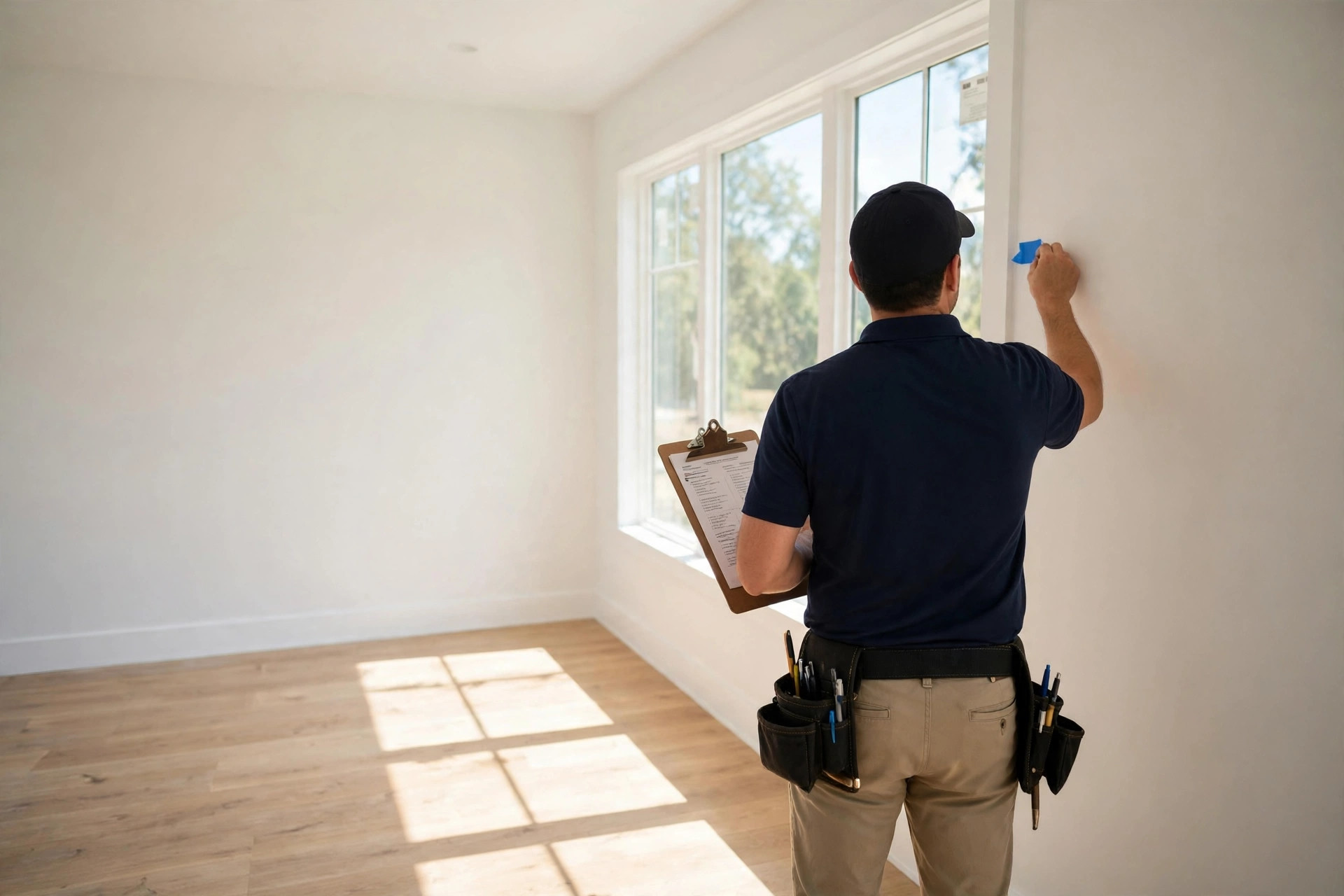
New does not mean finished. A newly built home can have a crooked cabinet door, a window that does not latch, a shower that never gets hot, and a roof vent that was never sealed — all behind fresh paint. The final walkthrough is the moment those things get found and written down, while the builder still has trades on site and a closing date to hit. Once you close, the same defects become warranty items: still fixable, but on the builder's timeline rather than yours.
The short answer: the final walkthrough — sometimes called the pre-closing orientation or blue-tape walk — usually happens a few days to a week or two before closing, with the builder's superintendent walking you through the home and recording everything that still needs attention. That list is the punch list. Plan on two to three hours for a typical 2,000–3,000 sq ft home, and bring blue painter's tape, a flashlight, a phone charger or outlet tester, and a copy of your plans and selections sheet. Then book one more inspection at 11 months, before the one-year workmanship warranty runs out.
Why "new" still needs an independent look
A common misunderstanding is that a new home has already been inspected. It has — but not the way buyers assume. The municipal final inspection confirms the home meets the building code; it is not a finish-quality check. The builder's own walkthrough is done by the people who built the house. Neither one checks whether the paint is even, the doors latch, the grout is complete, or the dishwasher actually runs.
That is why many buyers hire an independent home inspector for the final walkthrough, or at least for a pre-drywall inspection earlier in the build and a final inspection before closing. The inspector works for the buyer, not the builder, and the report they produce is the document the punch list gets built from. A photo of each defect, with its location and severity noted, is much harder to argue with than a verbal "the kitchen looked off."
The punch list, and how blue tape works
A punch list is a detailed completion list of items that need to be installed, adjusted, repaired, cleaned, or verified before the project is considered finished. Most punch items are small — a loose door handle, a faucet that needs straightening, missing caulk, a paint scuff, a cabinet door that needs adjusting, a fixture that needs tightening. Small items do not necessarily mean poor construction; they mean the house is at the stage where dozens of trades have passed through and nobody has done a final pass yet.
The blue-tape protocol is simple and effective: stick a piece of blue painter's tape next to every defect where you find it, and photograph each one. By the end of the walk the house will look marked up — that is the point. The tape makes every item visible to the builder's crew, and the photos make every item provable if there is ever a dispute about whether it was there before closing.
Room by room: what to check
Work the same way in every room — ceiling, walls, windows, doors, floor, then fixtures and outlets — so nothing gets skipped.
Every room
- Drywall and paint: shine a flashlight along the wall at a low angle — raking light reveals nail pops, visible tape seams, drips, and uneven texture that overhead lighting hides. Check inside closets and behind doors, where touch-ups are most often skipped.
- Doors and windows: open and close every door; it should latch without slamming and not rub the jamb. Operate every window, test the locks, and look for cracked or fogged glass and missing screens. Check for daylight around exterior door weatherstripping.
- Floors: walk the whole house listening for squeaks. Look for scratched hardwood or vinyl plank, lifted seams, cracked tile, and carpet seams that show.
- Electrical: plug a tester or phone charger into every outlet, including exterior and garage outlets. Test the GFCI test and reset buttons, and confirm the electrical panel is labeled.
Kitchen and bathrooms
- Run every faucet hot and cold, fill and drain every sink and tub, flush every toilet — then look under each cabinet with a flashlight for drips.
- Check that the shower reaches comfortable hot water, that tile grout is complete, and that caulk lines at tubs and countertops are continuous.
- Open every cabinet door and drawer. Run the dishwasher, disposal, range hood, and bathroom exhaust fans.
Outside
- Roof and gutters: look for lifted or missing shingles and exposed nail heads; gutters and downspouts should be installed and draining away from the foundation.
- Grading and drainage: the ground should slope away from the foundation on all four sides. Standing water near the house is a finding, not a landscaping detail.
- Garage and driveway: open and close the garage door and check that the auto-reverse works; look for cracks in the driveway, walkways, and garage slab.
- HVAC: run the heating and cooling, confirm airflow at every register, and check that every register is present and attached.
The 1-2-10 builder warranty, in plain terms
Most US builder warranties follow a "1-2-10" pattern, and the clock starts at closing — but the exact terms are whatever your contract says, so read that document, not this summary:
| Period | What it typically covers |
|---|---|
| Year 1 | Workmanship and materials — the broadest tier, and the one you will use most: paint, drywall cracks, flooring, trim, doors, and cabinet fit |
| Years 1–2 | Major systems — plumbing supply and drain lines, electrical wiring, and HVAC ductwork and distribution |
| Years 1–10 | Major structural defects — actual failure of load-bearing parts such as the foundation, beams, load-bearing walls, and floor and roof framing that makes the home unsafe or unlivable |
Two things buyers get wrong: first, the ten-year tier is narrow — it covers structural failure, not cosmetic problems, and some states set a shorter structural term (Texas, for example, requires six years). Second, manufacturer warranties run alongside the builder warranty — appliances, the water heater, HVAC equipment, roofing, and windows are usually covered by the manufacturer, and the builder passes those warranties to you.
The 11-month inspection: the one builders do not remind you about
The one-year workmanship warranty is the most time-sensitive tier, and it expires quietly. The standard advice is to schedule an inspection at 11 months after closing — a month before the workmanship coverage ends — so the inspector can find the cracks, nail pops, sticking doors, and settling issues that appeared during the first year of living in the house, and you can file them while the builder still has to fix them.
The same logic applies at 23 months for the two-year systems tier. Put both dates in your calendar at closing; nobody else will.
What makes a walkthrough report actually useful
A punch list scribbled on a notepad is hard to hand to a superintendent and harder to prove a month later. A good walkthrough report does three things: it shows each defect with a photo, it says where it is and how serious it is, and it says what should happen next. Photos without a location are hard to find again; findings without a severity are hard to prioritize; and a defect with no photo is easy to dismiss as "it was like that."
That is the same discipline behind a complete inspection report — and it is why home inspection report software matters at a walkthrough too. Photos and short notes taken on site become a structured document with severity badges and repair-cost estimates, exported as a clean PDF the buyer can send to the builder and the agent. InspectReport AI is built for exactly that workflow, and its built-in new construction final walkthrough template starts the report with the sections a walkthrough actually needs. Accounts, reports, and the live preview are free, every new account gets a free 7-day Pro trial with full access including PDF export and no card required, and after the trial it is $9 a month flat per account with no per-inspector fees (as of November 2026).
A new home deserves the same careful documentation as an old one — arguably more, because the defects are the builder's to fix and the clock on that obligation starts the day you close. Walk it slowly, tape everything, photograph every flag, and get the report to the builder before closing. Then set the 11-month reminder before you unpack the last box.
Try it on your next job — free
Every new account gets a free 7-day Pro trial with full PDF export, and no card is required. After the trial, $9/mo flat per account keeps PDF export — reports and the live preview stay free either way.
Start my free 7-day trialMore from the blog
- Wind Mitigation Inspections: What the OIR-B1-1802 Checks — and Why Photos Decide the Discount
- Home Inspection Report Software for Multi-Inspector Firms: Flat Pricing vs Per-Inspector Fees
- 4-Point Inspection Reports: What Insurers Ask For and How to Deliver Them Fast
- Section 8 Inspections Are Changing: NSPIRE, the 24-Hour Clock, and What to Walk Before February 1, 2027
- Commercial Building Inspection Reports: What a CAPEX Summary Adds for Buyers and Owners
- InspectForge Pricing Explained: What Inspectors Actually Pay
- HomeGauge Pricing Explained: What Inspectors Actually Pay
- What Buyers Actually Read in Your Inspection Report (and What They Skip)
- Winter Home Inspections: Freeze Damage, Furnaces, and What Changes on Site
- Switching Home Inspection Report Software: A Migration Checklist That Loses Nothing
- AI in Home Inspection Reports: What It Can and Can't Do, Honestly
- Change Orders Without the Fight: Documenting Extra Work So Customers Approve It
- For Roofers: How to Write a Repair Quote Customers Approve Faster
- Same-Day Report Delivery: The Workflow That Makes It Routine
- Repair-Cost Estimates in Inspection Reports: How Inspectors Price Findings
- Home Inspection Checklist: What Inspectors Check, Room by Room
- Spectora Pricing Explained: What 1-, 3-, and 5-Person Shops Actually Pay
- How Much Does Home Inspection Software Cost in 2026? Vendor-by-Vendor Math
- Home Inspection Report Template: What a Complete Report Includes
- Best Home Inspection Report Software in 2026: An Honest Ranking
- How to Write a Home Inspection Report Faster (Without Cutting Corners)
- Spectora vs InspectReport AI: An Honest Comparison (2026)
- HomeGauge vs InspectReport AI: An Honest Comparison (2026)
- How Contractors Can Document Jobs with Photos and Send a Clean, Priced PDF